
It is no coincidence that Bologna is home to one of Europe’s most important film archives, while throughout the year the city hosts festivals, retrospectives and events dedicated to the seventh art.
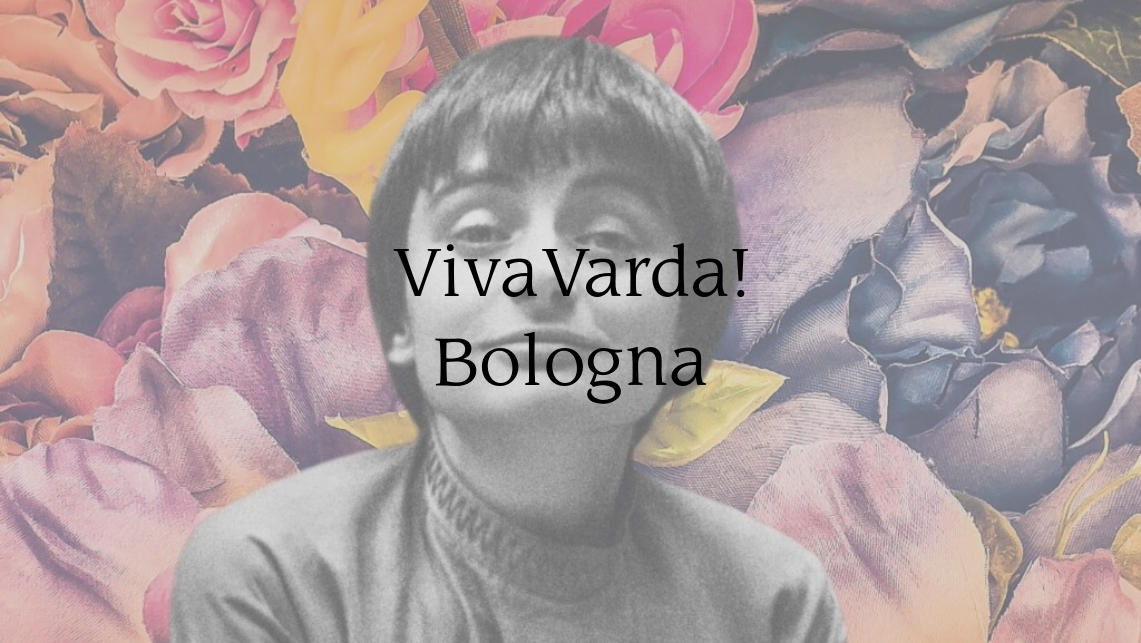
For film lovers, 2026 offers yet another reason to visit Bologna: Viva Varda! Cinema is a Woman, the exhibition dedicated to Agnès Varda, on display at the Galleria Modernissimo until 10 January 2027.
It is the perfect excuse to spend a day exploring the city, following not only its artistic and cultural heritage, but also the traces left by cinema among its squares, porticoes and historic theatres. Viva Varda! Cinema is a Woman: the exhibition , the exhibition dedicated to Agnès Varda, which will be on view at the Galleria Modernissimo until January 10, 2027.
A great reason to plan a day in the city, following not only the trails of art and culture but also those left by cinema amidst squares, arcades, and old movie theaters.
Viva Varda! Il cinema è donna: la mostra
Viva Varda! Il cinema è donna è una mostra monografica dedicata ad Agnès Varda, regista, fotografa e artista francese considerata una delle figure più originali della storia del cinema contemporaneo.
Curated by Florence Tissot, with artistic direction by Rosalie Varda, the exhibition extends across approximately 1,200 square metres and explores Varda’s work through cinema, photography, art and cultural engagement.
Varda è stata la prima regista donna a ricevere l’Oscar alla carriera e la prima regista donna a vincere nei principali festival internazionali, tra cui Cannes, Venezia, Berlino e Locarno.
Varda was the first female filmmaker to receive an Honorary Academy Award and the first woman director to win major honours at some of the world’s leading international film festivals, including Cannes, Venice, Berlin and Locarno.
The exhibition, however, is not simply intended as a biography. Its aim is to convey the complexity of her vision and the way Varda moved effortlessly between different artistic languages, from cinema to photography, often transforming the camera into a tool for observing reality, people and society from unexpected perspectives.
It is therefore a fascinating event not only for lovers of auteur cinema, but for anyone interested in discovering one of the most important female figures in the history of filmmaking.
Cinema Modernissimo: a historic theatre brought back to life
Once you arrive in Piazza Re Enzo, it is well worth continuing your journey with a visit to the nearby Cinema Modernissimo.
The history of the theatre is, in itself, a little piece of cinema history.
Originally created inside Palazzo Ronzani in the early twentieth century, the space was converted into a cinema in 1915 and remained in operation until 2007. Following an extensive restoration project, the new Cinema Modernissimo reopened on 21 November 2023, bringing a historic venue devoted to film culture back to the heart of Bologna.
The restoration also revived the original decorative features and atmosphere of the theatre, once again making it one of the most evocative places in the city to enjoy a film screening.
And there is one detail that film enthusiasts will particularly appreciate: during his visit to Bologna in June 2023, Martin Scorsese officially christened the newly restored Cinema Modernissimo.
Itinerary: a day in Bologna following in the footsteps of cinema
The Agnès Varda exhibition can be the perfect starting point for turning your visit into an entire day devoted to the seventh art, combining cinema, leisurely walks and some of the Bologna locations that have appeared on the big screen.
Morning: the Modernissimo and Bologna’s historic centre
Start in Piazza Re Enzo. Once you leave the exhibition, there is no need to go far.
Walk towards Piazza Maggiore, passing beneath the Voltone del Podestà, and stop in front of the Basilica of San Petronio. This is where cinema left behind one of its most recognisable images: the steps of the basilica appear in Pier Paolo Pasolini’s 1967 film Oedipus Rex.
From Piazza Maggiore, continue towards Strada Maggiore and the portico of Santa Maria dei Servi, which also features in several scenes from the same film.
Walking through Bologna’s film sets
One of the best things about this itinerary is that there is no need to search for purpose-built film sets: in Bologna, the city itself is often the scenery.
Continuing towards Via Santo Stefano, you can reach Palazzo Davia Bargellini, which Pupi Avati used as a location for several scenes in his 2003 film The Heart Elsewhere.
From here, a short detour leads to Via Borgonuovo 4, the birthplace of Pier Paolo Pasolini. The street is also associated with Pupi Avati’s television series A Marriage.
For those who would like to explore further, the Cineteca di Bologna has created an extensive archive of cinematic locations throughout the city, documenting places used in films shot in Bologna and across Emilia-Romagna.
Afternoon: the Bologna where cinema is preserved
After visiting the Modernissimo, continue your journey into another side of Bologna’s film heritage: the Cineteca di Bologna.
Head to Piazzetta Pier Paolo Pasolini, in the Manifattura delle Arti district. Here you will find the Cinema Lumière and the Renzo Renzi Library, one of Italy’s leading centres for the preservation and study of film culture.
The Cineteca houses archives, photographs, screenplays and countless materials connected with the history of cinema, while also organising screenings, talks and retrospectives throughout the year.
Even if you simply stop for a while to soak up the atmosphere, this corner of Bologna is well worth discovering: here cinema is not merely something to watch, but a cultural heritage to preserve, study and rediscover.
Evening: dinner at Ristorante Corbezzoli
In the evening, return to Relais Bellaria for dinner at Ristorante Corbezzoli.
After a day devoted to cinema, moving between a photography exhibition and some of Bologna’s most cinematic locations, it is time to switch languages.
At the table, Chef Giuseppe Tarantino’s cuisine tells the story of the meeting between his Campanian roots and the culinary traditions of Emilia-Romagna, reinterpreted in a contemporary style using fresh, local and seasonal ingredients.
It is a cuisine built around memory, exploration and Mediterranean flavours, complemented by a carefully selected range of Italian and international wines.
Perhaps this is the best way to discover Bologna through cinema: not necessarily by searching for major attractions, but by learning to recognise the stories hidden within the places people pass through every day.
Have you already booked your next stay at Relais Bellaria?